By Tom Johnson
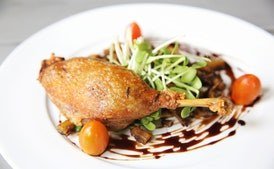
Duck Legs Confit Cooked in a Pouch is a tender and crispy delicacy, where succulent duck legs are slowly cooked in their own fat until they are melt-in-your-mouth tender.
30 minPrep Time
N/AServings
Nutritional Information
-Calories
-Protein
-Carbs
-Fat
-Sugar
Na-Sodium
Ingredients
- 4 Moulard or large Muscovy duck legs, or 6 Pekin or small Muscovy duck legs (about 3 pounds)
- 1/4 cup Diamond Crystal kosher salt or 2 teaspoons per pound
- 2 sprigs fresh thyme
- Freshly ground black pepper
Instructions
- 1Season duck legs with salt and a few thyme leaves. Wrap in paper toweling and refrigerate 24 hours.
- 2The following day: Rinse off seasonings, blot very dry, and wrap in pairs in boilable pouches, then use a FoodSaver or professional vacuum packing device to seal airtight.
- 3Cover one stovetop burner with a Simmer Mat or heat diffuser.
- 4Place the sealed pouches in a deep flameproof ceramic or cast-iron casserole and cover with hot water.
- 5Be sure the pouches are completely submerged; if necessary, weight them down.
- 6Place the casserole over the mat or heat diffuser set over medium-low heat.
- 7Cover the casserole and heat to 180°F (use an instant-read thermometer), then reduce heat to low and allow to simmer at a constant 180°F temperature for at least 8 hours for Moulard, 9 for Muscovy, or 5 to 6 hours for Pekin. (If you have an electric oven, alternatively, you can place the pouches in very hot water in a casserole and cook at 180°F overnight. (Because of the constant water temperature, the flesh won’t cook beyond its stage of “doneness.”)
- 8The duck is ready when the flesh feels very tender, begins to separate from the bone, and the joint between leg and thigh cracks easily.
- 9When you remove the pouches from the casserole, immediately set the pouches in a bowl of ice water to chill until completely cold, about 30 minutes.
- 10The fat should congeal.
- 11Refrigerate until ready to use, within one week (see Cooks' Notes below).
- 12When ready to serve: Place the pouches under warm running water until you can easily break the chunks of the fat away from the meat.
- 13Open each pouch and separate the fat and jelly-like juices from the flesh.
- 14Set the fat aside for some other purpose; use juices for sauces or add to the beans.
- 15If using for cassoulet, bone the legs and break the meat into large chunks.
- 16Brown the skin to a crisp in a skillet; season the flesh side with pepper.
- 17Add the meat chunks and skin to the cassoulet
Save this recipe and plan your week
A free account lets you save recipes, plan your meals and build grocery lists.
Or get the app: App Store · Google Play